Co Managed SOC Services Explained
Learn how co managed soc services improve 24/7 detection, response, and coverage without the cost and staffing burden of a full in-house SOC.
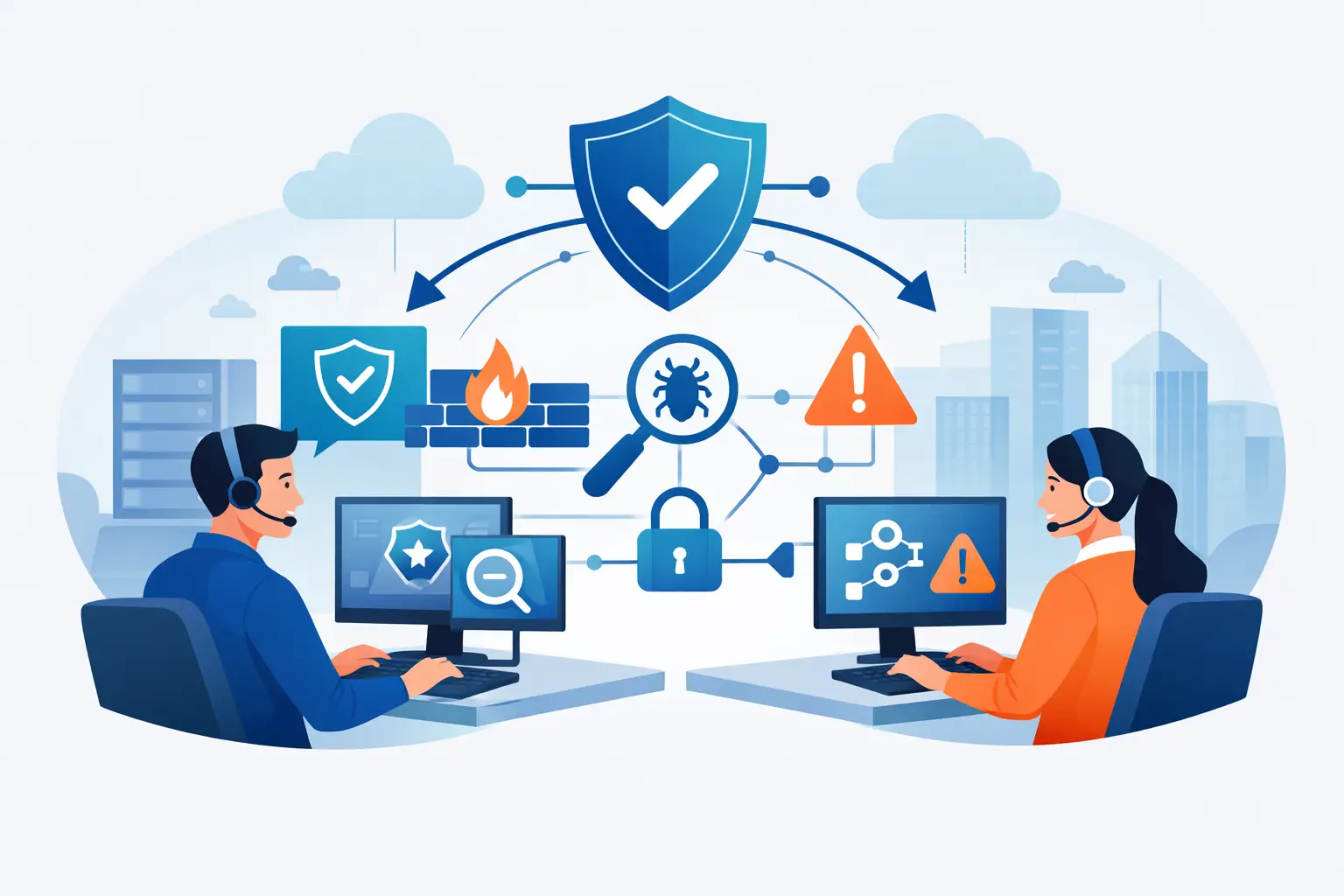
Security teams usually hit the same wall at some point. The tooling gets better, the alert volume gets worse, and the pressure to investigate faster never lets up. That is where co managed soc services start to make operational sense. They give internal IT and security teams a way to extend coverage, improve response quality, and keep control of their environment without carrying the full burden of building and staffing a 24/7 SOC alone.
What co managed soc services actually mean
Co managed soc services sit between two models that many organizations already know well: a fully in-house SOC and a fully outsourced security operation. In a co-managed model, the customer still owns part of the security program. The external SOC adds continuous monitoring, triage, investigation, threat hunting, response support, and often tuning or strategic guidance.
That shared operating model matters. It means the business does not give up visibility or decision-making authority, but it also does not need to maintain deep around-the-clock coverage with internal staff alone. For MSPs, MSSPs, and VARs, it creates another advantage. They can bring enterprise-grade SOC capability to customers without having to recruit analysts, run shifts, and maintain detection quality at all hours.
The best co-managed arrangements are not vague partnerships. They define ownership clearly. Who handles alert validation? Who isolates endpoints? Who approves containment? Who communicates with users or executives during an incident? If those boundaries are not established early, the model can create confusion instead of resilience.
Why organizations choose a co-managed SOC model
Most teams do not choose this model because it sounds modern. They choose it because internal security operations are expensive, difficult to scale, and hard to keep staffed. Analysts burn out. Coverage gaps appear at night, on weekends, and during employee turnover. Even well-funded teams struggle to keep pace with detection engineering, threat intelligence, and response coordination.
Co managed soc services reduce that strain by adding mature operational coverage where internal teams are weakest. For some businesses, that means 24/7 monitoring. For others, it means better investigation depth, faster escalation, or access to analysts who have seen the same attacker behavior across many environments.
There is also a strategic reason this model keeps growing. Many organizations have already invested in endpoint, identity, cloud, SIEM, and log management platforms. They do not want to rip and replace those tools just to improve operations. A co-managed approach can layer expert monitoring and response onto the existing stack, which protects prior investment while fixing the operational gap.
Where co managed SOC services deliver the most value
The biggest value is not simply more alerts getting looked at. It is better decision-making under pressure. A good SOC partner filters noise, correlates activity across tools, investigates suspicious behavior, and escalates what actually matters. That helps internal teams spend less time chasing low-value alarms and more time on real remediation and risk reduction.
This model is especially effective when an organization has capable IT leadership but limited security depth. The internal team understands business systems, user impact, and change control. The external SOC brings analytical discipline, repeatable process, and 24/7 operational consistency. Together, those strengths create better outcomes than either side can usually deliver alone.
For channel partners, the value extends beyond security operations. Co-managed delivery can strengthen client retention and recurring revenue while preserving the partner relationship. White-labeled SOC support is often the difference between offering a credible security service and losing that opportunity to a larger provider with a dedicated cyber practice.
How the operating model should work
Shared responsibility, not shared confusion
A co-managed SOC only works when both sides know their role. The provider should own monitoring discipline, triage quality, investigation workflow, and escalation rigor. The customer or channel partner should retain authority over business-specific decisions such as acceptable downtime, approval for disruptive response actions, and internal communication.
That separation keeps the SOC efficient. Analysts can act quickly within defined playbooks, while the customer stays in control of operational and business risk decisions. The practical result is faster response without unnecessary overreach.
Tool flexibility matters
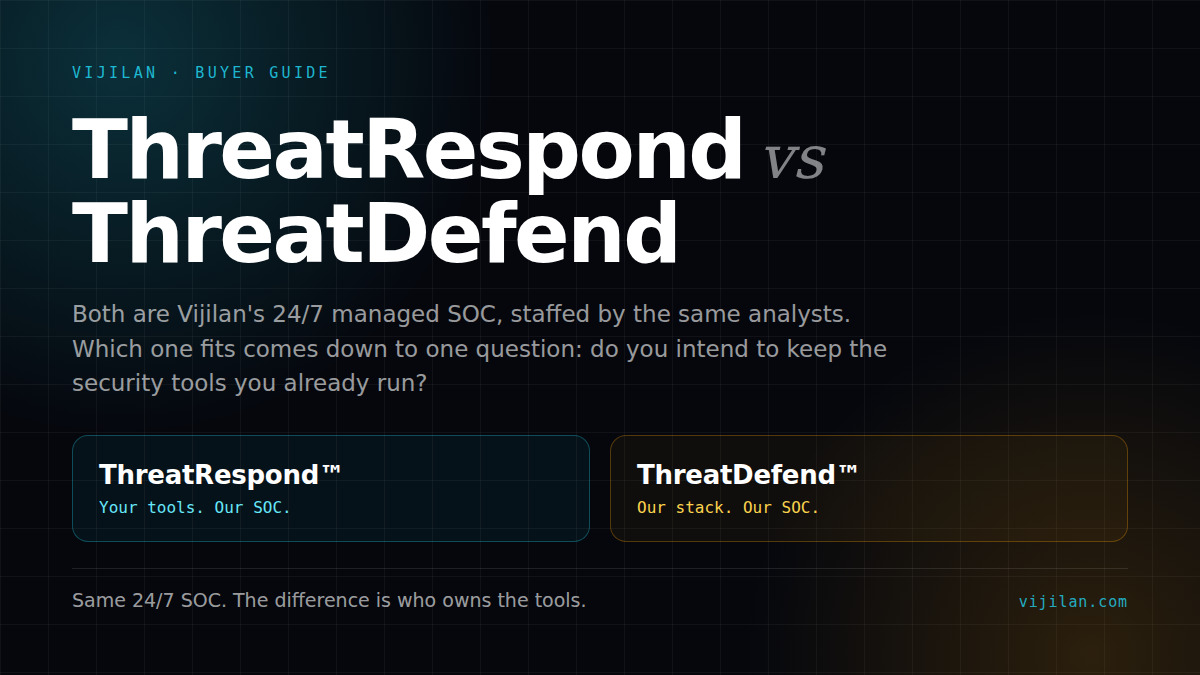
Some organizations want a SOC partner that can operate on the tools they already own. Others want a bundled model that includes the security stack as well as the analysts behind it. Both approaches can work.
The right fit depends on maturity, budget, and internal capability. If the customer has already standardized on strong endpoint or SIEM tooling, support for customer-owned tools may be the fastest path to value. If the environment is fragmented or underpowered, a packaged service that includes both technology and SOC operations may produce cleaner outcomes.
Escalation has to be immediate and usable
Alerting alone is not a service model. Mature co-managed operations deliver context, evidence, and a recommended action path. Internal teams should not receive a stream of ambiguous notifications that require them to restart the investigation from scratch.
A real SOC partner shortens the path from detection to action. That means validated alerts, clear incident notes, response guidance, and when authorized, direct action to contain threats before they spread.
What to evaluate before you buy
Not every provider offering co managed soc services is built the same way. Some are strong on tooling but weak on analyst quality. Others monitor during business hours and market it as continuous coverage. Some can detect threats but not support response with enough speed or precision.
Buyers should look hard at the operating details. Is the service actually 24/7? Are analysts live and active, or is after-hours coverage mostly automation? Can the provider support customer-owned tools, or only a fixed stack? How are incidents escalated? What actions can the SOC take directly? How does the provider support the channel if the service is being delivered through an MSP, MSSP, or VAR?
Reporting also matters, but not for cosmetic reasons. The right reports should show coverage, response activity, attacker patterns, and tuning opportunities. They should help both technical teams and business leaders understand whether security operations are improving over time.
Common trade-offs to consider
Co-managed does not mean effortless. The customer still needs internal accountability. Someone must own policy decisions, asset context, user coordination, and remediation follow-through. If a business expects the external SOC to replace all internal security ownership, the model will disappoint.
There is also a balance between speed and control. Some organizations want the SOC to take direct action quickly, such as isolating endpoints or disabling accounts. Others require internal approval before any containment step. Neither approach is automatically right. It depends on regulatory requirements, change management discipline, and tolerance for operational disruption.
Tool strategy is another trade-off. Keeping existing tools may reduce change and preserve investment, but older platforms can limit visibility or response depth. A bundled service may improve performance, but it can require platform changes that some teams are not ready to make. The best providers can support both paths and recommend the right one based on risk, not product preference.
Why this model works especially well for channel partners
For MSPs, MSSPs, and VARs, the gap between customer demand and internal capacity is often the central business problem. Clients want 24/7 monitoring, faster incident response, and enterprise-grade security outcomes. Building that capability internally requires capital, staffing, process maturity, and constant management attention.
Co managed soc services solve that problem without forcing the partner to surrender the customer relationship. With a channel-aligned operating model, the partner can stay front and center while the SOC runs behind the scenes or in a co-branded structure. That makes it possible to expand cybersecurity revenue while avoiding the cost and operational drag of building a SOC from scratch.
This is where provider alignment matters. A partner-first, white-labeled model — one with a written commitment never to compete with partners for their clients — is fundamentally different from a provider that competes for the end customer. Partners need a SOC operator that strengthens their service portfolio, protects their account ownership, and delivers consistently enough to support long-term recurring revenue. That is why companies like Vijilan are structured around both security outcomes and partner enablement.
The strongest co-managed SOC relationship feels less like outsourcing and more like an extension of the security team. That is the standard to hold. If the provider adds coverage, sharpens response, respects ownership boundaries, and helps you act faster when threats are real, the model is doing exactly what it should.
Threat notes, once a week
What our SOC actually saw this week: new attack patterns, the detections we shipped against them, and what it means if you run an MSP. Written by the analysts, not by marketing.
See what 24/7 looks like when the SOC actually acts.
Book a 20-minute platform walkthrough: no slide deck, just the console.
Book a walkthrough →