XDR vs MDR for Businesses: What Fits?
XDR vs MDR for businesses comes down to tools, staffing, and response. Learn which model fits your risk, budget, and security maturity best.
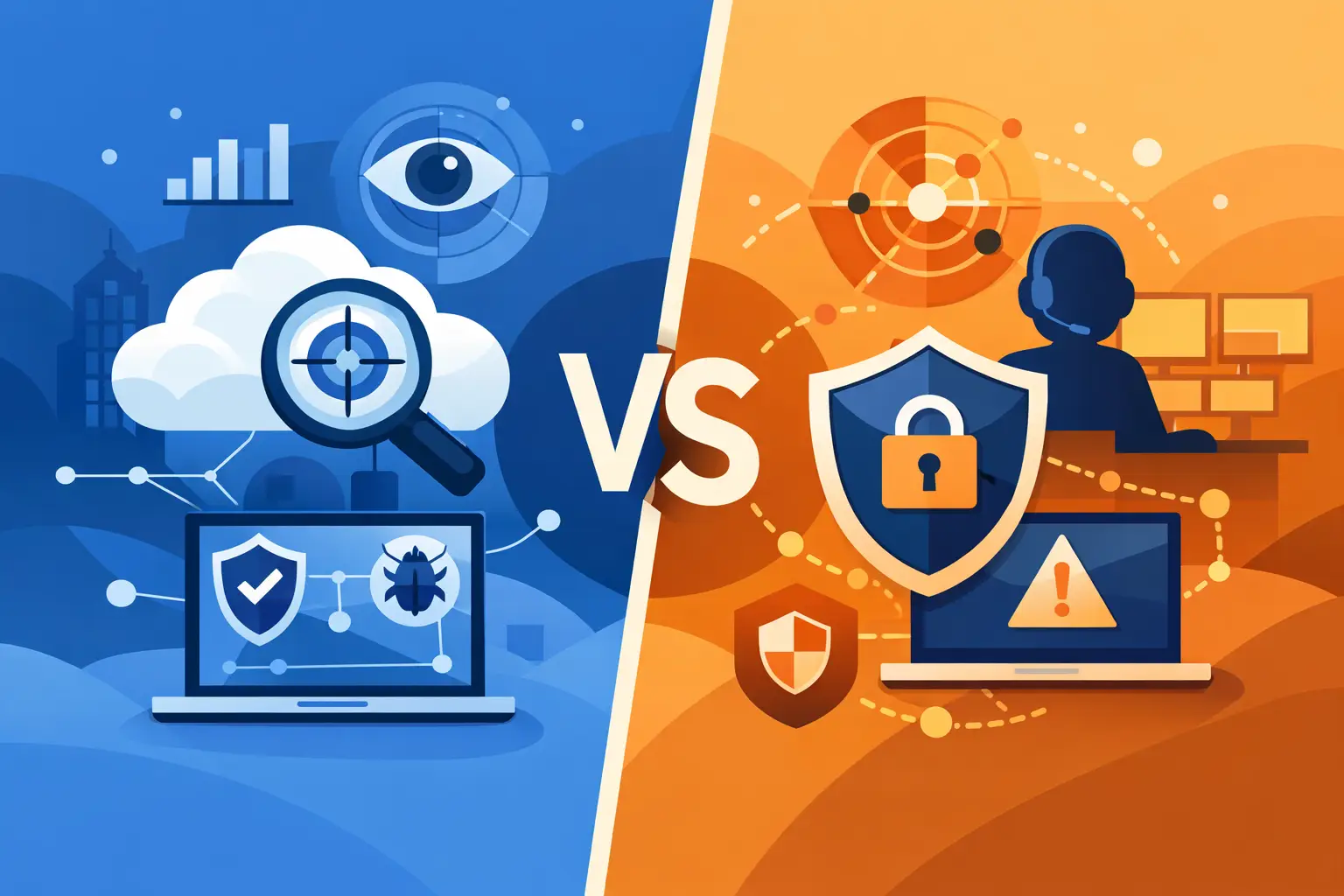
A ransomware alert at 2:13 a.m. does not care whether your team bought the right platform. It cares whether someone sees it, investigates it, and acts before damage spreads. That is the real issue in xdr vs mdr for businesses - not which acronym sounds more advanced, but which operating model gives you dependable detection and response when an incident is active.
For MSPs, MSSPs, VARs, and internal IT leaders, the decision is rarely just technical. It affects staffing, service delivery, customer expectations, and risk ownership. XDR can improve visibility across endpoints, identities, cloud workloads, email, and network telemetry. MDR adds a managed security layer, with analysts and responders watching, validating, and escalating or containing threats. Both can strengthen security. They do not solve the same problem in the same way.
XDR vs MDR for businesses: the core difference
XDR, or extended detection and response, is primarily a technology model. It brings signals from multiple security controls into a more unified detection and investigation workflow. In practice, that can mean richer telemetry, better correlation, fewer blind spots, and stronger analytics than a standalone endpoint tool.
MDR, or managed detection and response, is an operating model. It gives a business access to a security team that monitors alerts, investigates suspicious activity, and takes action based on the service scope. The value is not just the platform. The value is the live SOC function behind it.
That distinction matters. XDR helps security tools work together more effectively. MDR helps businesses that do not have enough internal security coverage, expertise, or round-the-clock response capacity. One is largely centered on capability inside the stack. The other is centered on outcomes delivered by people, process, and technology together.
This is why many organizations end up comparing two things that are not direct substitutes. A company can buy XDR and still be under-defended if nobody is actively reviewing and responding to what the platform finds. A company can buy MDR and gain strong operational coverage even if the underlying toolset is not marketed as XDR. Increasingly, the market is moving toward managed XDR or mXDR models because buyers want both broad telemetry and active response.
Where XDR makes sense
XDR is a strong fit for organizations that already have internal security operations maturity. If you have analysts, incident response processes, escalation paths, and the ability to monitor outside business hours, XDR can raise the performance of your security program. It can reduce swivel-chair work between consoles, improve investigative context, and help analysts move faster.
For larger enterprises, this can be compelling. Internal SOC teams often need better correlation across fragmented tools. XDR can help consolidate visibility and improve detection logic without requiring a full rip-and-replace of every control. It may also support compliance and reporting needs by centralizing event context.
But XDR has a recurring challenge. Technology produces findings. People still have to decide what matters. If the environment generates too many detections, or if internal staff are stretched thin, the platform can become another source of backlog rather than a force multiplier. Businesses sometimes buy XDR expecting automation to remove the need for human expertise. In real operations, that expectation usually fails under pressure.
Where MDR makes sense
MDR is often the better fit when the business needs security outcomes more than another console. Small and midsized businesses, distributed organizations, and lean IT teams commonly face the same gap: they own risk 24/7, but they only staff for business hours. MDR closes that gap by putting a managed security company between the business and the threat landscape.
That matters for end-user organizations, and it matters just as much for channel partners. An MSP may want to deliver enterprise-grade cybersecurity services without building a SOC, hiring analysts, and managing a follow-the-sun operation. MDR creates a way to offer monitored detection and response as a recurring service rather than trying to assemble it internally from tools alone.
The strongest MDR services do more than forward alerts. They validate suspicious activity, investigate across available telemetry, prioritize what is actionable, and respond according to agreed procedures. That may include host isolation, malicious process containment, escalation support, and incident guidance. The service quality depends heavily on the maturity of the SOC, the breadth of data sources, and how clearly response responsibilities are defined.
Not all MDR services are equal, though. Some are endpoint-heavy and narrower in scope. Others reach further into cloud, identity, firewall, and email telemetry. Buyers should not assume MDR automatically means broad coverage. They should ask what data is monitored, what actions the provider can take, and whether the service operates continuously or mainly as alert triage.
XDR vs MDR for businesses: the operational trade-off
If the choice were only about feature depth, this would be easier. The real decision is about operational burden.
XDR usually demands more internal ownership. Your team is responsible for configuration quality, tuning, triage, investigation, and often first-line response. Even with strong automation, someone has to maintain the logic, review detections, and decide when a signal is genuinely malicious. That works when the business already has people who can perform those functions consistently.
MDR shifts more of that burden to a specialist provider. You are not just paying for tool output. You are paying for monitoring discipline, analyst coverage, and a defined response motion. That can accelerate time to value because the business does not need to stand up the full operational layer itself.
The trade-off is control versus coverage. XDR can give internal teams more direct control over how detections and workflows are configured. MDR can give faster access to mature 24/7 coverage, but within a service structure that defines what the provider handles and what stays with the customer. Businesses that value precision customization may lean toward XDR. Businesses that need immediate operational readiness usually lean toward MDR.
Cost is not just license versus service
Many buyers evaluate XDR as software spend and MDR as service spend. That framing is incomplete.
XDR may look less expensive on paper if you only compare subscription costs. But the full cost includes security engineers, analysts, after-hours coverage, ongoing tuning, incident handling, and management overhead. If those functions are weak or missing, the lower software price does not translate into lower risk.
MDR may carry a higher apparent monthly cost, yet it can reduce the need for internal hiring, lower alert fatigue, and improve response speed. For an MSP, it can also create a sellable security service without the capital and staffing required to build a SOC. The economics improve further when the provider supports white-label or channel-aligned delivery, since that lets partners expand recurring revenue while keeping the customer relationship centered on their own brand.
The better question is not which model is cheaper. It is which model produces defendable coverage at a sustainable operating cost.
Why many organizations are moving beyond the binary
The market itself has already exposed the limitation of the xdr vs mdr for businesses debate. Most organizations need both broader telemetry and active operational response. That is why managed XDR has become more relevant than either term in isolation.
A managed XDR approach combines platform visibility with SOC execution. The tool stack contributes cross-domain detection. The managed team contributes monitoring, investigation, and action. This structure is often more realistic for businesses that need high-confidence protection but do not want to assemble a full internal security operation.
It also gives channel partners a stronger service architecture. Rather than selling disconnected products, they can deliver an integrated security outcome with clear ownership, faster onboarding, and a more credible response posture. In that model, the provider relationship becomes strategic, not just transactional.
A managed cybersecurity company such as Vijilan fits this direction because the service model is built around 24/7 SOC operations, AI-driven detection, and real analyst response, whether the customer wants support around an existing toolset or a bundled stack with managed defense built in. That matters because businesses do not buy acronyms when an incident starts. They buy coverage that acts.
How to choose without overcomplicating it
If your organization has a staffed security team, mature playbooks, and the discipline to operate a detection program continuously, XDR may be the right investment. It can sharpen your existing operation and improve visibility across controls.
If your team is lean, your coverage is inconsistent after hours, or your business needs outcomes more than tooling administration, MDR is likely the stronger fit. It closes the operational gap that most internal IT teams and channel partners struggle to close on their own.
If you need both stronger technology integration and a live response function, stop treating XDR and MDR as opposing choices. Look for a service model that combines them in a way that matches your environment, your staffing reality, and your risk tolerance.
The best security decision is usually the one that makes action possible at the moment action is required. That is the standard worth buying against.
Threat notes, once a week
What our SOC actually saw this week: new attack patterns, the detections we shipped against them, and what it means if you run an MSP. Written by the analysts, not by marketing.
See what 24/7 looks like when the SOC actually acts.
Book a 20-minute platform walkthrough: no slide deck, just the console.
Book a walkthrough →