What an Enterprise Incident Response Service Does
Learn what an enterprise incident response service does, when to use one, and how 24/7 SOC response reduces dwell time and business risk.
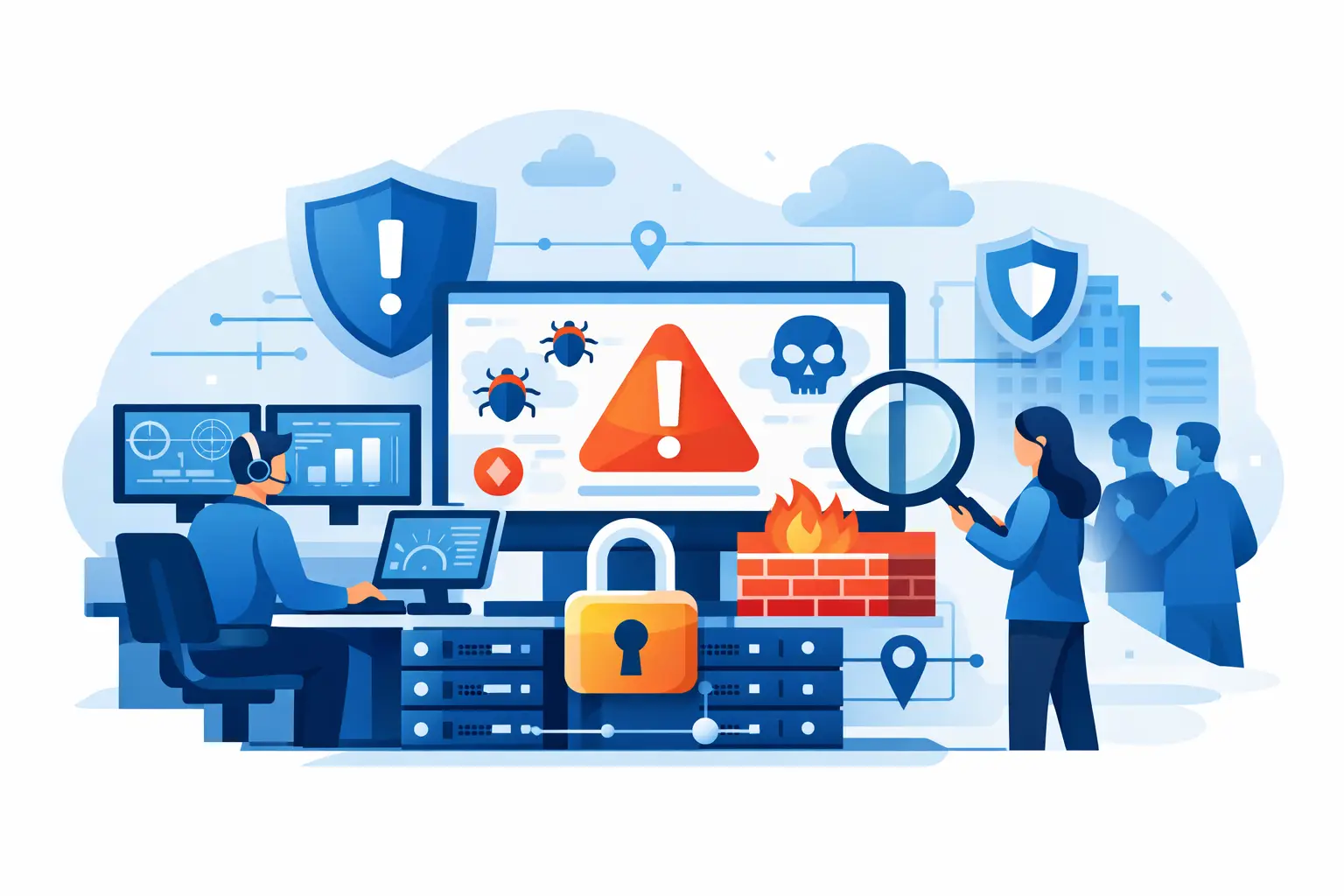
A ransomware alert at 2:13 a.m. does not wait for your security team to come online. By the time a business confirms whether the alert is real, an attacker may already be moving laterally, disabling controls, and staging data for exfiltration. That is where an enterprise incident response service proves its value - not as a document or a retainer that sits idle, but as an operational capability that detects, investigates, contains, and guides recovery under pressure.
For enterprise organizations, MSPs, MSSPs, and VARs serving security-conscious clients, the question is not whether incidents will happen. It is whether response will be fast enough, disciplined enough, and available enough to reduce impact. A credible response model has to work across cloud, endpoint, identity, network, and user activity. It also has to work at 3:00 a.m., during holidays, and in the middle of routine business operations when internal teams are already stretched.
Why enterprise incident response service has changed
Traditional incident response was often episodic. A company would call outside specialists after a breach was already visible, then scramble to scope the damage, collect evidence, and make containment decisions with limited context. That model still has a place in major crisis events, but it is no longer enough on its own.
Modern attacks unfold faster and hide better. Threat actors use valid credentials, blend into administrative activity, and chain together low-noise techniques that can look like normal behavior unless telemetry is monitored continuously. The operational gap between detection and action has become one of the biggest drivers of breach cost.
That is why the modern enterprise incident response service is increasingly tied to a live SOC and managed detection and response workflow. Instead of waiting for a full-blown emergency, the provider is already watching, triaging, correlating signals, and escalating based on severity. Response starts earlier. Containment decisions are based on richer data. The business spends less time figuring out what happened and more time limiting damage.
What the service should actually include
A mature service is not just a hotline to call during a breach. It is an operating model. At a minimum, it should include 24/7 monitoring, alert validation, threat investigation, incident classification, escalation paths, containment support, and recovery guidance. The strongest providers also align those functions with customer tools, workflows, and business risk.
That distinction matters. Many organizations have security tools that generate volume but not clarity. They may have endpoint protection, SIEM, identity telemetry, firewall logs, and cloud alerts, but they still lack the analyst coverage needed to turn signal into action. An enterprise response service becomes materially more valuable when it bridges that gap and acts on the telemetry already present.
For channel partners, this is also where service design affects commercial value. If the provider can deliver under a white-labeled or co-branded model, the partner can offer enterprise-grade incident response without building a 24/7 SOC from scratch. That changes the economics. Instead of recruiting scarce analysts, maintaining shift coverage, and standing up tooling integrations internally, the partner can extend a mature response capability under its own customer relationship.
Detection without response is not enough
A common problem in enterprise environments is tool sprawl without operational follow-through. Alerts arrive. Tickets are opened. Priority gets debated. The internal team does its best, but the response clock keeps running.
An effective enterprise incident response service closes that gap by tying detection to analyst-led decision making. That means investigating whether the event is malicious, determining scope, identifying affected assets and identities, and recommending or initiating containment. If a host needs isolation, if an account needs disabling, or if a suspicious process tree needs deeper review, the process cannot stall because no one is available to make the call.
Response has to fit the environment
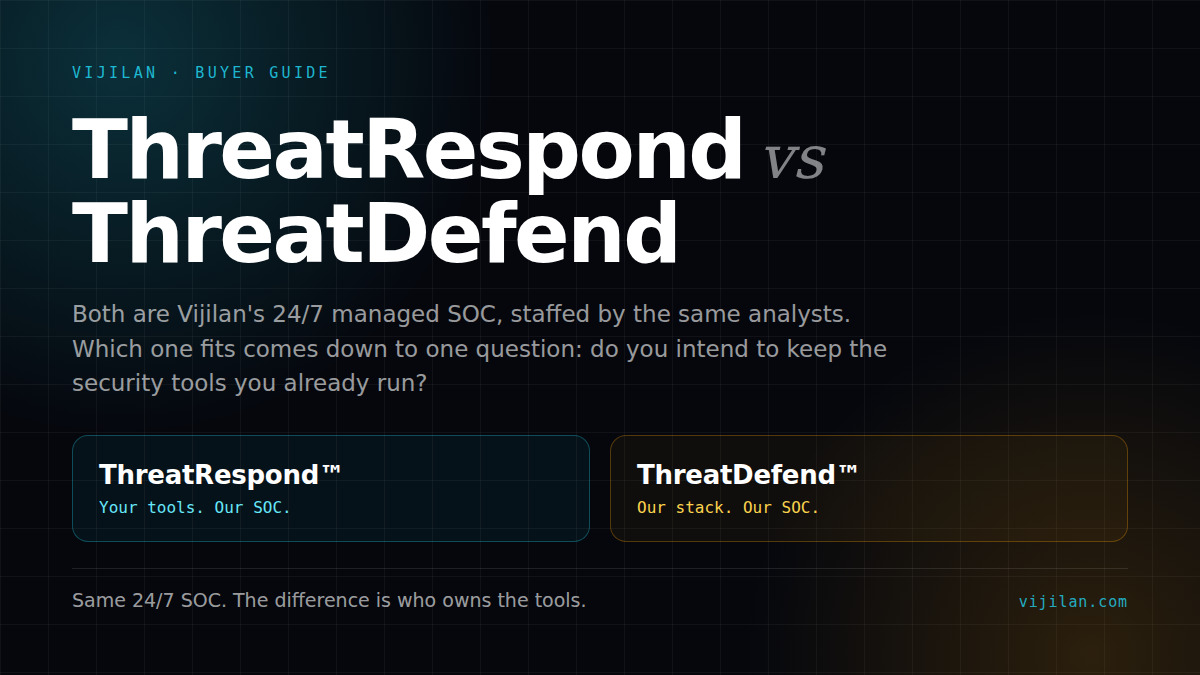
Not every enterprise wants the same service model. Some organizations want a provider to work with customer-owned tools and existing controls. Others want the provider to supply both the security stack and the SOC function. Both approaches can work, but the trade-offs are real.
Using existing tools may preserve prior investments and fit internal architecture better. It can also introduce complexity if the environment is fragmented or if integrations are inconsistent across business units. A provider-supplied stack can simplify operations and speed up time to value, but only if the underlying platform is strong and the deployment aligns with business requirements, compliance expectations, and endpoint coverage goals.
How to evaluate an enterprise incident response service
The first question is operational, not marketing-driven: who is watching the environment when your team is not? If coverage is not truly 24/7, the service may still help, but it is not closing the exposure window that attackers rely on.
The second question is whether the provider investigates or simply forwards alerts. Escalation without analysis shifts workload back to the customer. That may be acceptable for highly mature security teams, but for most organizations and channel partners, the value comes from validated incidents, context-rich reporting, and guided action.
The third question is about containment authority and process. Some providers only advise. Others can execute agreed response actions under a predefined playbook. Neither model is automatically better. It depends on your governance model, legal requirements, and internal comfort level. But you should know the answer before the first major incident, not during it.
A fourth consideration is how the provider handles communication. During a live incident, speed matters, but so does discipline. Stakeholders need to know what is confirmed, what is suspected, what is being done, and what decision is needed next. Overstating confidence early can create downstream problems. Under-communicating can delay business action. Strong providers operate with precision under uncertainty.
What enterprise buyers and channel partners should expect
Enterprise buyers should expect a service that reduces dwell time, improves containment speed, and gives leadership a clear operational view during an incident. They should also expect the provider to understand the practical realities of hybrid environments, identity-based attacks, cloud workloads, and endpoint-driven telemetry.
Channel partners should expect more than backend analysts. They should look for a service structure that supports recurring revenue, customer retention, and brand continuity. White-labeled delivery, documented operating procedures, and a clear escalation framework matter because the partner is not only managing risk - it is managing trust.
This is where a managed cybersecurity company with a 24/7 SOC model stands apart from ad hoc response firms. A live SOC sees precursor activity, failed attack paths, suspicious behavior chains, and repeat patterns across environments. That broader visibility improves triage and sharpens response. It also supports a more stable service experience for partners that need consistency across many client accounts.
The real trade-off: build internally or partner
Some large organizations still prefer to build as much as possible in-house. There are good reasons for that, especially in highly regulated environments or where internal teams need full process control. But internal buildouts are expensive, hiring is difficult, and round-the-clock analyst coverage is hard to sustain.
Partnering for an enterprise incident response service introduces dependency on an outside provider, so due diligence matters. You need confidence in the provider's analysts, processes, reporting, and escalation model. Yet for many organizations, the practical comparison is not between a perfect in-house SOC and an outside service. It is between partial internal coverage and a mature, always-on operating model that can act now.
For MSPs, MSSPs, and VARs, the answer is often even clearer. Building a full internal SOC to support customer demand can slow growth and strain margins. Partnering with a provider that combines AI-driven detection with human-led investigation and response can accelerate service maturity without sacrificing customer experience.
A provider such as Vijilan fits this model when the goal is to extend enterprise-grade response through a channel-aligned operating structure. That matters for partners that need credible 24/7 SOC coverage, clear service models, and the option to support either customer-owned security tools or a provider-delivered security stack.
Where the service makes the biggest difference
The biggest gains usually come from speed and consistency. Faster validation reduces false escalation. Faster containment reduces spread. Consistent investigation reduces confusion when multiple alerts appear related but are actually part of one attack chain.
That discipline becomes especially valuable in ransomware events, identity compromise, business email compromise, suspicious PowerShell activity, cloud account abuse, and lateral movement scenarios. In each case, minutes matter, but so does judgment. Isolating the wrong system can interrupt operations. Waiting too long can expand impact. The provider has to know when to act hard and when to investigate one step further.
That is the real standard for an enterprise incident response service. It should not just help you respond after the fact. It should make response operational, continuous, and ready before the next alert appears. When service design, SOC coverage, and analyst action all line up, the organization is not left hoping its tools are enough. It has a team that is already watching, already deciding, and prepared to act.
Threat notes, once a week
What our SOC actually saw this week: new attack patterns, the detections we shipped against them, and what it means if you run an MSP. Written by the analysts, not by marketing.
See what 24/7 looks like when the SOC actually acts.
Book a 20-minute platform walkthrough: no slide deck, just the console.
Book a walkthrough →