Bring Your Own Tool SOC: What Fits
See when a bring your own tool SOC makes sense, where it adds risk, and how to choose a model that fits your stack, team, and response needs.
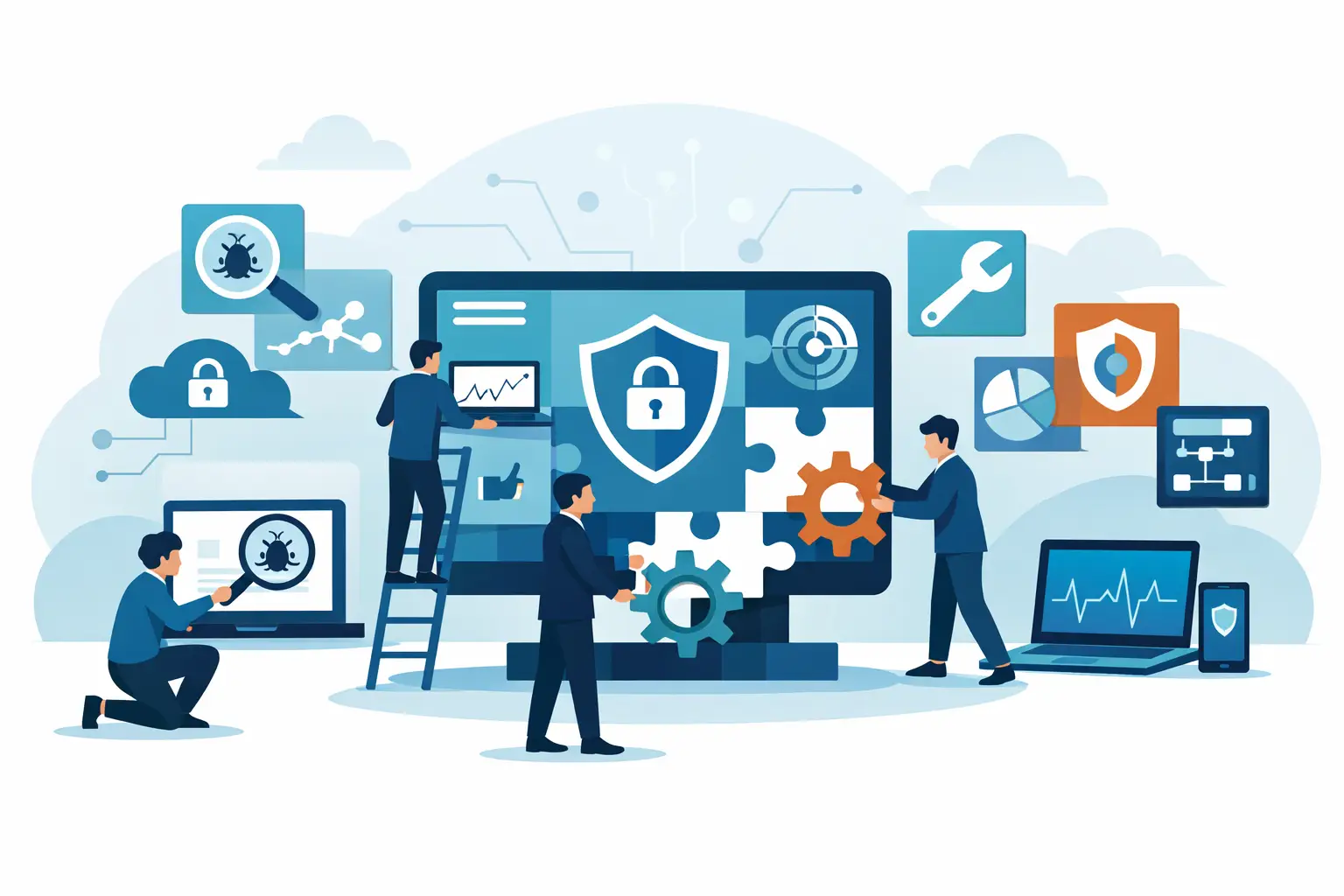
A security stack can look solid on paper and still fail at 2:13 a.m. when nobody owns the alert, nobody trusts the telemetry, and nobody is authorized to act. That is the real decision behind a bring your own tool SOC model. It is not just about keeping the tools you already bought. It is about whether your operating model can turn those tools into verified detection, investigation, and response around the clock.
For MSPs, MSSPs, VARs, and internal IT leaders, that distinction matters. Tool sprawl is common. Licensing commitments are real. Many organizations have already invested in endpoint, SIEM, email security, identity controls, and cloud telemetry. Replacing all of it is expensive and disruptive. A bring your own tool SOC can preserve that investment while adding the missing layer - a live security operations capability that monitors, triages, investigates, and acts.
What a bring your own tool SOC actually means
A bring your own tool SOC uses the customer’s existing security stack as the primary telemetry and control layer, while an external or dedicated SOC team delivers monitoring and response. In practice, this means the SOC does not insist on ripping and replacing every product in the environment. Instead, it integrates with the tools already deployed and builds an operating model around them.
That sounds straightforward, but the quality of the outcome depends on more than connector support. The SOC has to know what data is available, what is missing, how detections are tuned, and which actions can be executed from which platform. If those details are weak, a BYOT model becomes a passive alerting service. If they are handled well, it becomes an effective extension of the customer’s security operation.
Why buyers choose this model
The strongest reason is financial reality. Many organizations have made meaningful investments in tools they cannot justify abandoning. For channel partners, the same is true across a customer base with mixed environments and vendor preferences. A bring your own tool SOC creates flexibility. It lets partners support customers where they are instead of forcing a one-stack answer on every account.
There is also an operational reason. Some organizations have highly specific compliance, architectural, or procurement requirements. They may need to retain a preferred EDR platform, a particular cloud security control, or a SIEM already tied into audit workflows. In those cases, replacing the stack can introduce more friction than security value.
For service providers, the appeal is commercial as well as technical. A BYOT SOC model can help expand managed security revenue without requiring every customer to standardize immediately. It supports white-labeled delivery, preserves strategic vendor relationships, and gives partners a way to layer expert SOC operations on top of existing client environments.
Where bring your own tool SOC works best
This model works best when the customer already has credible security controls in place but lacks 24/7 operational coverage. The tools are there. The people, process, and always-on investigative discipline are not.
That is a common scenario. A business may have a capable endpoint platform, identity monitoring, firewall telemetry, and cloud logs, but no internal team available overnight or on weekends. An MSP may manage infrastructure well but not have analysts trained to validate detections, correlate signals, and make response decisions under pressure. In both cases, the SOC fills the operational gap without forcing an immediate platform change.
It also works well in transitional environments. A company might be modernizing its stack over time, consolidating tools after acquisition, or moving workloads into cloud platforms in phases. A bring your own tool SOC can stabilize security operations during that transition, provided the service model is clear about what is covered and what is not.
The trade-offs that buyers should not ignore
BYOT is flexible, but flexibility is not the same as simplicity. The more varied the toolset, the harder it is to normalize telemetry, tune detections, and maintain consistent response playbooks. Different products expose different levels of visibility and control. Some generate rich telemetry but weak response actions. Others do the opposite.
This is why the phrase bring your own tool SOC can be misleading if treated as a blanket promise. Not every stack is equally mature. Not every deployment is properly configured. Not every customer-owned tool is producing the data required for quality threat hunting or rapid containment.
There is also a responsibility question. If a customer owns the tools, who owns policy tuning, agent health, log retention, API changes, or broken integrations? If that answer is unclear, incident handling slows down fast. During a real event, ambiguity is a liability.
Another trade-off is detection consistency. A provider-supplied security stack can often be engineered to a known standard. A BYOT model starts with variability. That does not make it weaker by default, but it does mean onboarding, validation, and runbook design matter more.
What to evaluate before choosing a bring your own tool SOC
The first question is not vendor branding. It is telemetry quality. If your existing tools do not produce reliable endpoint, identity, network, email, and cloud signals, the SOC will have blind spots from day one. Buyers should ask which data sources are required, which are optional, and how the SOC validates collection integrity.
The second question is response authority. Can the SOC isolate hosts, disable accounts, block indicators, and initiate containment when needed? Or does it only notify your team and wait? There is no universal right answer, but there must be a documented one. A 24/7 SOC that cannot act often becomes a 24/7 escalation service.
The third question is operational ownership. Buyers should understand who manages integrations, tuning, rule updates, case handling, and evidence collection. In mature models, these are not informal assumptions. They are defined responsibilities with escalation paths and service expectations.
The fourth question is fit for channel delivery. For MSPs and MSSPs, a bring your own tool SOC must work across multiple customer environments without turning every deployment into a custom engineering project. That means standardized onboarding, transparent coverage definitions, and clear white-label support if the partner is customer-facing.
BYOT SOC versus provider-supplied stack
This is not a simple better-or-worse decision. It depends on the environment, the business model, and the urgency of improvement.
A provider-supplied stack is often faster to standardize. The SOC knows the telemetry model, detection logic, and response actions in advance. That can improve speed to value and simplify support. It is especially useful when the customer’s current stack is fragmented, outdated, or poorly configured.
A bring your own tool SOC is stronger when the customer already has high-quality tools and wants to protect that investment. It is also attractive when partner ecosystems or procurement rules make standardization difficult. But the buyer should expect more upfront validation work. Success depends on integration depth, process rigor, and realistic assumptions about what the existing tools can support.
Some organizations ultimately need both options available. One customer may fit a BYOT model because the stack is solid and the gap is operational. Another may need a provider-led security stack because the tooling itself is the problem. A mature managed cybersecurity company should be able to guide that choice rather than force a single answer.
How to tell if the model is mature
A mature BYOT SOC offering does not just say yes to every tool. It defines supported technologies, required telemetry, response limitations, onboarding steps, and success criteria. It also explains how analysts investigate across mixed environments, how alert fatigue is controlled, and how incidents are escalated when the customer’s tools do not allow direct action.
It should be clear how the provider handles tuning over time. Threat activity changes. Environments change. Integrations break. New assets appear. A real SOC service keeps adapting, because static configurations do not hold up for long.
For channel partners, maturity also shows up in service design. Can the provider operate behind your brand? Can it support recurring delivery without operational chaos? Can it help you scale security services while protecting your customer relationships? These are not secondary concerns. They are central to whether the model works commercially.
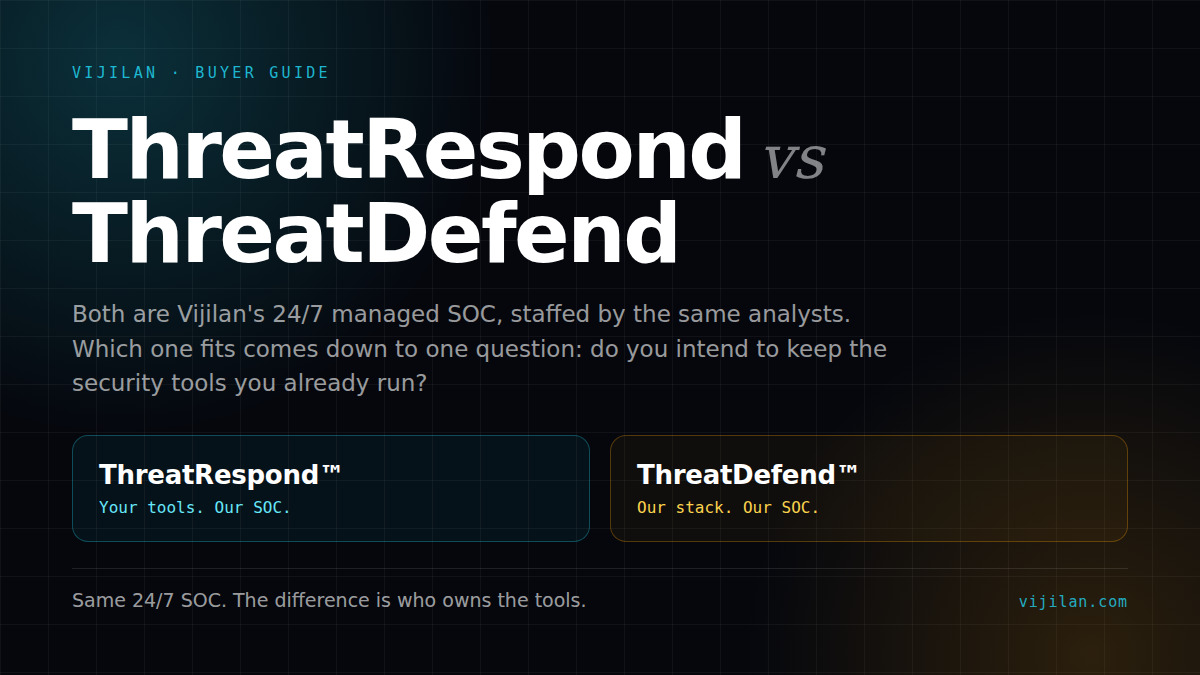
One example of this operating approach is pairing customer-owned tools with dedicated SOC expertise through a service such as ThreatRespond, while offering a provider-supplied stack for environments that need a more standardized security architecture. That dual-path model is often the most practical because it respects the reality that not every customer starts from the same place.
The real decision behind bring your own tool SOC
A bring your own tool SOC is not a shortcut. It is a choice to preserve tool investment while outsourcing the discipline of detection and response. When it works, it gives organizations and channel partners a way to add 24/7 coverage without rebuilding everything. When it fails, it is usually because buyers assumed tools alone were enough.
The better question is not whether you can keep your stack. It is whether your stack, your provider, and your response model are aligned well enough to stand up to a live incident at the exact moment your team is least prepared. That is the standard that matters, and it is the one worth testing before the next alert stops being theoretical.
Threat notes, once a week
What our SOC actually saw this week: new attack patterns, the detections we shipped against them, and what it means if you run an MSP. Written by the analysts, not by marketing.
See what 24/7 looks like when the SOC actually acts.
Book a 20-minute platform walkthrough: no slide deck, just the console.
Book a walkthrough →