CrowdStrike Falcon Managed Service Explained
Learn what a crowdstrike falcon managed service includes, how it operates in a 24/7 SOC model, and when it fits MSPs and businesses best.
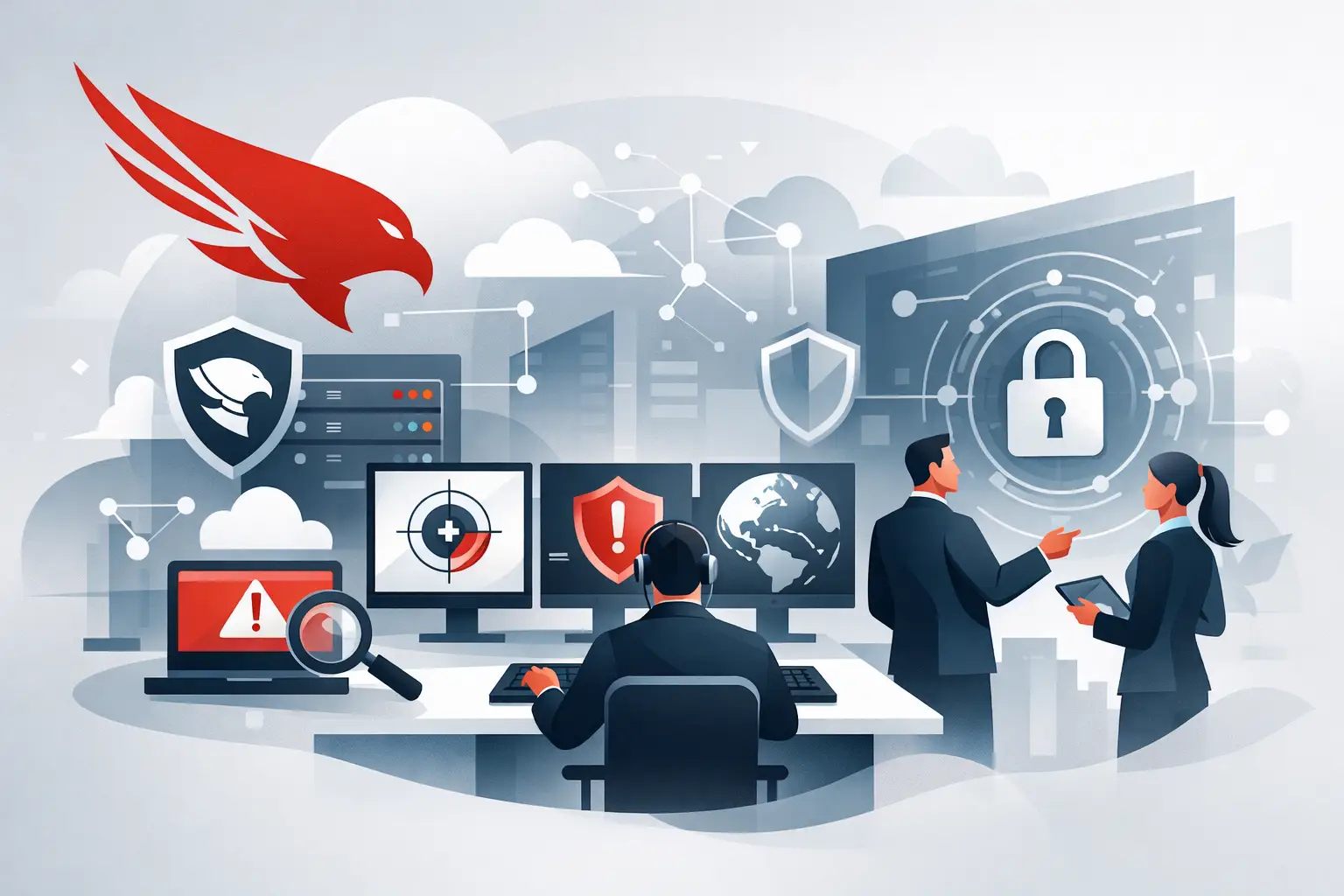
At 2:13 a.m., an endpoint alert does not care whether your team is understaffed, your security lead is asleep, or your MSP is still building out its SOC offering. That is where a crowdstrike falcon managed service becomes operationally valuable. It turns a strong endpoint security platform into a continuously monitored, actively managed defense capability with people, process, and response attached.
CrowdStrike Falcon is widely respected for endpoint detection and response, threat intelligence, and cloud-delivered visibility. But buying the platform is not the same as running it well. The gap between tool ownership and security outcomes is where many organizations struggle. Alerts still need triage. Investigations still need context. Suspicious activity still needs someone to decide whether to isolate a host, escalate an incident, or tune the environment to reduce future noise.
What a CrowdStrike Falcon managed service actually delivers
A true CrowdStrike Falcon managed service is not just outsourced console administration. It is a service model built around 24/7 monitoring, detection review, investigation, response support, and ongoing optimization of the Falcon environment.
That distinction matters. Some providers stop at basic policy deployment, health checks, and occasional reporting. That can help with administration, but it does not give the customer a live security operations function. A stronger service wraps Falcon in an operating model that includes analysts, escalation paths, documented response actions, and measurable coverage after hours, on weekends, and during holidays.
For MSPs, MSSPs, and VARs, this changes the commercial equation. Instead of reselling software and leaving the customer to operationalize it, they can offer an always-on managed security outcome. For SMBs and enterprises, it reduces the burden of building and staffing an internal SOC around a platform that still requires expert handling.
Why Falcon alone is not the finish line
Falcon is powerful, but strong tooling does not eliminate operational workload. In many environments, the challenge is not visibility. It is sustained execution.
Security teams have to review detections against business context, distinguish commodity noise from meaningful attacker behavior, and move quickly when a real compromise is underway. That requires experience with endpoint telemetry, attacker techniques, tuning strategy, and incident handling. It also requires coverage outside business hours, which is often where internal teams and smaller providers hit a wall.
A crowdstrike falcon managed service addresses that gap by putting a 24/7 SOC behind the platform. The technology remains central, but the service layer becomes the difference between passive alerting and active defense.
It also requires someone noticing when the platform quietly stops reporting. A Falcon sensor that enters Reduced Functionality Mode keeps sending heartbeats while it stops processing events, so the host still appears healthy in the console while it is no longer protected. Our Falcon sensor service reference covers the status checks per platform and how to spot that state.
There is a trade-off, though. Outsourcing does mean trusting a partner with detection and response workflows. That is why the quality of the operating model matters more than the presence of the Falcon badge. Buyers should care less about whether a provider says it manages Falcon and more about how it investigates, how fast it acts, and how clearly it communicates during an event.
What strong service architecture looks like
The best managed services built around Falcon follow a disciplined model. They start with deployment and policy alignment, but they do not stop there. They establish baseline tuning based on the customer environment, user behavior, asset risk, and likely threat exposure.
From there, the service should include continuous monitoring by analysts who understand Falcon telemetry and know how to correlate it with broader threat activity. When suspicious behavior is detected, the provider should investigate, validate severity, and determine whether the activity reflects malware, credential misuse, lateral movement, hands-on-keyboard behavior, or a benign administrative action.
Response is where quality providers separate themselves. Some only notify. Others can recommend actions but need customer approval before every step. More mature models can execute predefined containment measures quickly, based on agreed playbooks. That may include host isolation, process termination, user escalation, or coordinated remediation guidance.
Reporting also matters, but not as a vanity exercise. Good reporting should show what was detected, what was investigated, what action was taken, and how the environment is trending over time. It should help both technical operators and business stakeholders understand risk without burying them in console exports.
For MSPs, the real value is operational leverage
Channel partners often look at Falcon and see a best-in-class security platform. That is true, but the harder question is whether they can support it at the service level customers now expect.
Selling endpoint protection is easier than delivering 24/7 threat detection and response. Building that capability internally means hiring analysts, creating escalation workflows, standardizing processes, maintaining after-hours coverage, and carrying the overhead of a SOC operation. For many MSPs, that slows growth and introduces execution risk.
A managed cybersecurity company with a channel-aligned delivery model can close that gap. In a white-labeled or co-branded structure, the partner keeps customer ownership while gaining immediate access to enterprise-grade SOC operations built around Falcon. That allows the MSP or MSSP to expand recurring security revenue without spending years assembling the people and process required to support it.
This is also where service design matters. A partner-friendly model should preserve the MSP's role, support consistent customer communication, and avoid channel conflict. If the provider acts like a direct competitor, the relationship becomes unstable. If it operates as a disciplined extension of the partner, it becomes a growth engine.
For end-user organizations, the question is speed to action
Most businesses do not lack security products. They lack continuous operational follow-through. Internal IT teams are often balancing infrastructure, user support, compliance, vendor management, and strategic projects. Even strong teams can miss an overnight incident or struggle to investigate Falcon detections at analyst depth.
That is why buyers should evaluate managed Falcon services based on actionability. How quickly does the SOC review alerts? How does it classify incidents? What response actions are available? Is there a defined handoff process when containment is needed? Does the provider tune the environment over time to improve signal quality?
The answer will vary by service model. Some organizations want the provider to act aggressively within predefined boundaries. Others need a more collaborative workflow because of internal governance or regulated environments. Neither approach is automatically better. It depends on the customer's risk tolerance, internal maturity, and change-control requirements.
How to evaluate a CrowdStrike Falcon managed service
The wrong way to evaluate a managed service is to compare feature lists only. The better way is to examine the operator behind the platform.
Ask how the service handles triage at 3:00 a.m., not just how it provisions agents. Ask whether investigations are performed by a live SOC. Ask how false positives are reduced over time. Ask what response authority exists when a device needs containment. Ask how the provider supports both urgent incidents and long-term tuning.
It is also worth examining whether the service can support different commercial models. An MSP may need white-label delivery and partner-first workflows. An enterprise may need direct analyst access, formal reporting, and alignment with internal security leadership. A capable provider should be able to support both without diluting operational discipline.
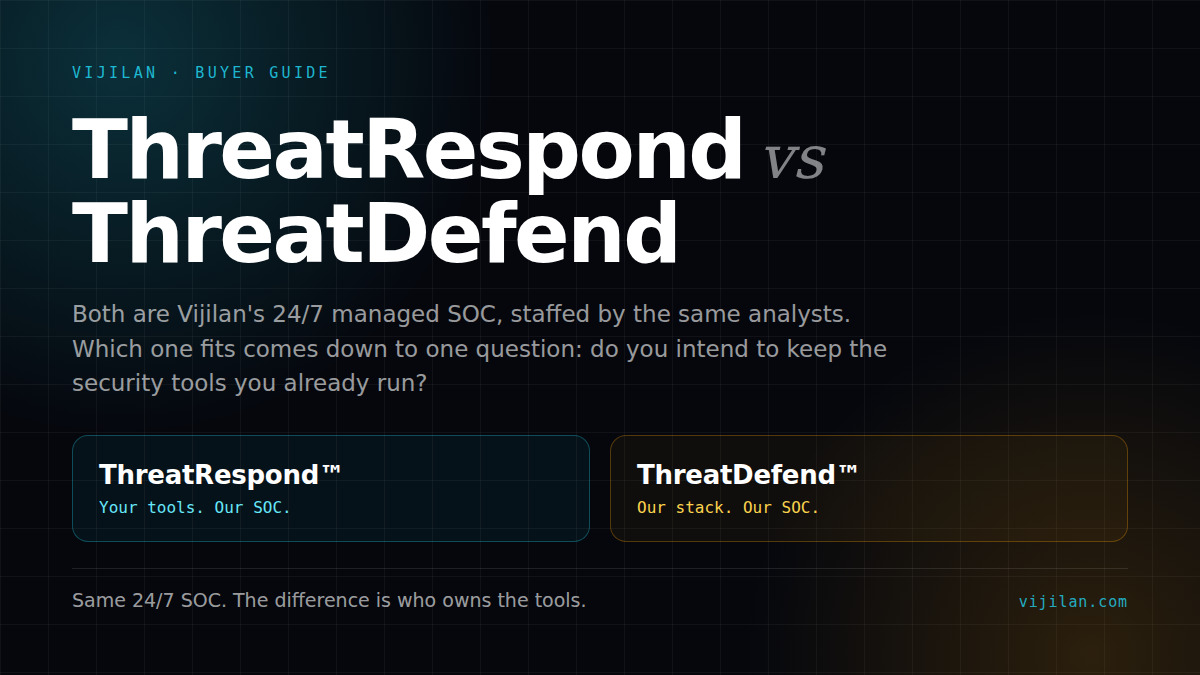
In the strongest models, Falcon is part of a broader managed detection and response architecture rather than a standalone administration service. That means AI-driven analytics, human validation, 24/7 monitoring, and a SOC that acts. Within Vijilan's ThreatDefend model, for example, CrowdStrike Falcon is paired with live SOC coverage to deliver both the security stack and the operational layer required to use it effectively.
Where this service fits best
A crowdstrike falcon managed service fits organizations that want Falcon's endpoint power but do not want the staffing burden of running round-the-clock detection and response internally. That includes fast-growing MSPs, security-focused channel partners, lean IT teams, and enterprises that need additional operational depth.
It may be less appropriate for organizations that already have a mature 24/7 internal SOC with dedicated Falcon expertise and fully staffed incident response functions. Even then, some still use managed support to extend coverage, reduce analyst fatigue, or add partner capacity during nights and weekends.
The key is not whether you have Falcon. It is whether your operating model can keep pace with what Falcon surfaces.
A good managed service should make that answer easier. It should give you clear visibility, disciplined response, and a team that is ready to act when the alert is still fresh, not after the damage has spread. In security operations, that difference is rarely theoretical. It is the line between detection and defense.
Threat notes, once a week
What our SOC actually saw this week: new attack patterns, the detections we shipped against them, and what it means if you run an MSP. Written by the analysts, not by marketing.
See what 24/7 looks like when the SOC actually acts.
Book a 20-minute platform walkthrough: no slide deck, just the console.
Book a walkthrough →