Managed Detection and Response for MSPs
Managed detection and response for MSPs adds 24/7 SOC coverage, faster containment, and scalable security delivery without building in-house teams.
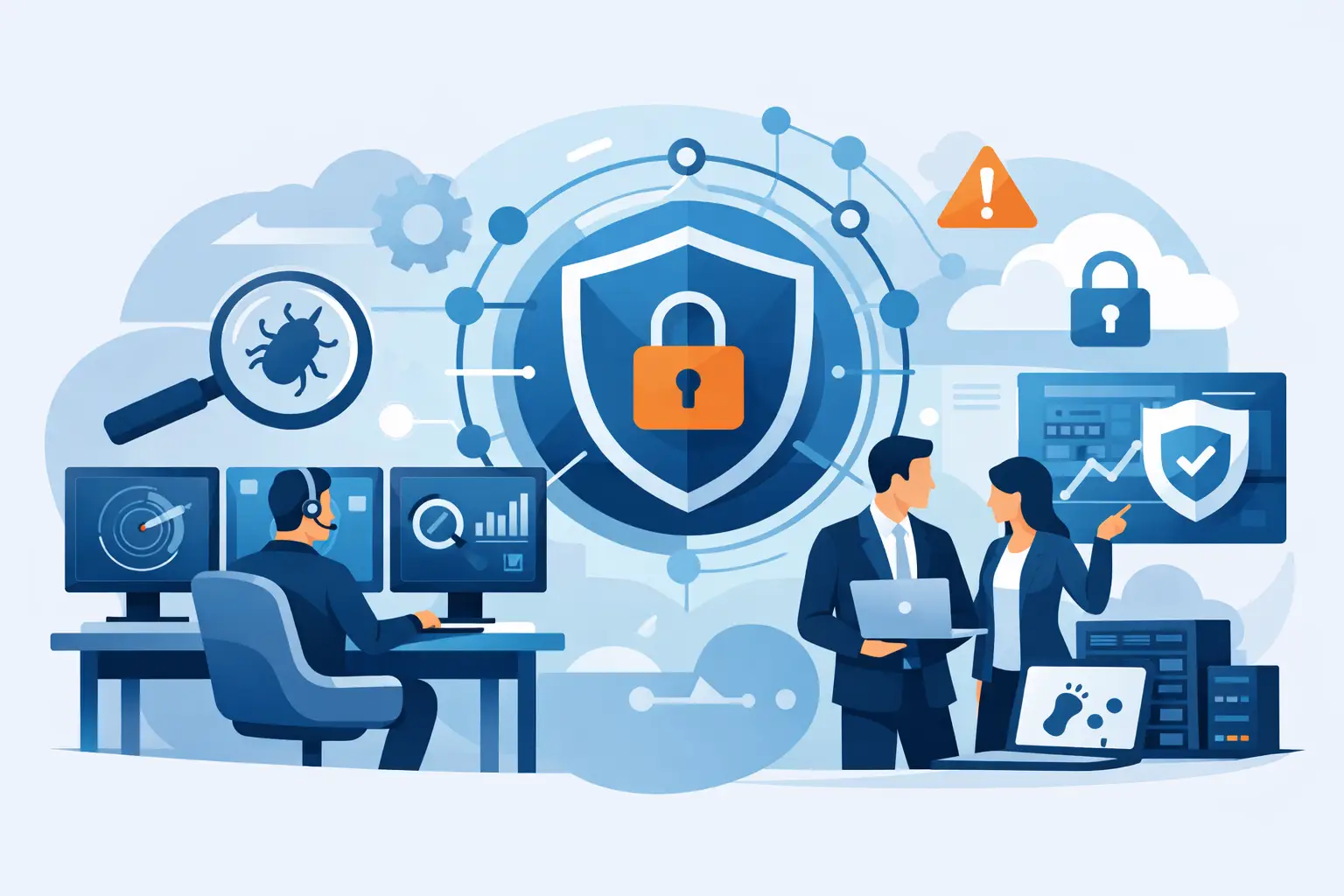
An MSP can patch systems, enforce MFA, and standardize endpoint tools across its client base - and still get blindsided at 2:13 a.m. by a hands-on-keyboard intrusion that moves faster than a generalist support team can triage. That gap is exactly why managed detection and response for MSPs has become a strategic service layer, not an optional add-on.
The issue is not whether clients need security monitoring. They do. The issue is whether an MSP can deliver credible 24/7 detection, investigation, and response at the speed modern threats require, without turning its own operation into an overextended pseudo-SOC. For most providers, that answer depends on the operating model behind the service.
Why managed detection and response for MSPs matters now
Ransomware crews, identity-based attacks, and living-off-the-land techniques do not wait for business hours. They exploit the fact that many small and mid-sized organizations have better tooling than they had five years ago, but still lack consistent monitoring and response discipline. MSPs sit in the middle of that reality. Clients already trust them with infrastructure, user environments, cloud administration, and business continuity. Security naturally follows.
But there is a difference between managing security products and managing security operations. An endpoint agent on every device is not a SOC. A SIEM ingesting logs is not an investigation workflow. Alert forwarding is not incident response. Buyers have become more aware of those differences, especially after seeing that controls alone do not stop a determined attacker.
That shift creates both pressure and opportunity for MSPs. Pressure, because clients increasingly expect around-the-clock visibility and action. Opportunity, because MDR gives service providers a path to offer enterprise-grade cyber defense without funding an internal 24/7 analyst bench, detection engineering program, and incident response process from scratch.
What MDR should actually deliver
At a practical level, managed detection and response for MSP environments should combine continuous telemetry analysis, threat validation by human analysts, and clear response actions. If one of those elements is weak, the service starts to look more like alert monitoring than true MDR.
The baseline requirement is continuous coverage across endpoints, identities, cloud workloads, and other relevant data sources. The next requirement is context. Analysts need to determine whether an alert reflects malicious activity, suspicious behavior, or expected administrative action. That matters in MSP settings because normal activity can vary widely between clients, and noisy detections can burn time and trust quickly.
Response is where many services separate. Some providers notify. Better providers investigate and guide. The strongest operating models take action - isolating hosts, terminating sessions, containing threats, and escalating with clear steps that fit the partner’s support structure. For an MSP, speed matters, but control matters too. The service has to fit how client communications, change approval, and incident ownership are handled.
The MSP challenge is operational, not theoretical
Most MSP leaders do not need another article telling them the threat landscape is complex. They already see phishing-driven account takeovers, unmanaged cloud risk, and endpoint compromise across their client portfolio. The harder question is whether they can operationalize MDR in a way that is profitable, scalable, and credible.
Building internally sounds attractive until the math shows up. True 24/7 security operations requires staffing for all shifts, vacation coverage, management oversight, detection tuning, case management, reporting, and regular process refinement. Even then, hiring and retention remain a constant issue. Security analysts with real triage and response experience are expensive, and the talent market does not get easier when an MSP is competing against enterprises and dedicated security firms.
Tool sprawl adds another layer. Different clients may already own different endpoint, firewall, identity, or log platforms. That means an MSP either forces standardization, which is not always commercially realistic, or learns to support multiple security ecosystems at once. Without the right partner model, that complexity can erode margins fast.
What to look for in managed detection and response for MSPs
The strongest MDR model for an MSP is one that supports service growth without compromising response quality. That usually starts with 24/7 SOC coverage backed by analysts who are accountable for investigation and action, not just notification queues.
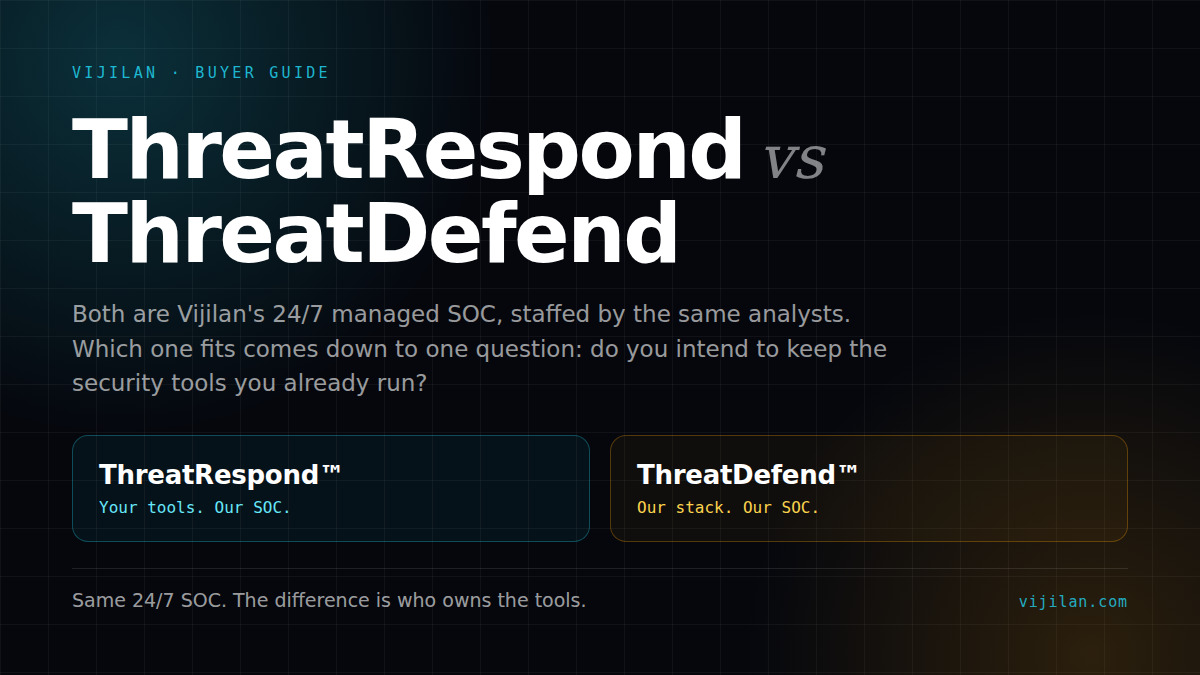
The second factor is flexibility in service architecture. Some MSPs want to retain customer-owned tools and add a SOC layer on top. Others prefer a bundled stack-and-service model that simplifies deployment and standardizes outcomes. Both approaches can work. The right fit depends on the maturity of the MSP, the variability of its client environments, and how much control it wants over the security stack.
White-label delivery is also more important than many buyers admit at first. For channel partners, branding is not cosmetic. It protects client ownership, supports recurring revenue, and allows the MSP to deliver a security practice that looks native to its business. If the MDR provider competes for the same customer relationship or weakens the partner’s brand position, friction appears quickly.
Commercial alignment matters just as much as technical alignment. MSPs need predictable recurring pricing, support for multi-tenant operations, and a partner motion designed for indirect delivery. A security vendor can have excellent technology and still be a poor channel fit if its onboarding model, support process, or escalation path was built for direct enterprise sales.
Two valid models: bring your tools or standardize the stack
There is no single right way to package MDR for an MSP. In practice, most successful programs fall into one of two models.
The first model layers SOC expertise over tools the customer or partner already owns. This approach preserves prior security investments and can reduce migration friction. It is often attractive when clients have existing endpoint, firewall, or cloud security controls that are worth keeping. The trade-off is consistency. Service quality depends partly on the visibility and response depth those tools can provide, and not every inherited environment is equally mature.
The second model combines the security stack with the SOC service. This gives the MSP more operational standardization, cleaner deployment patterns, and usually faster time to value. It can also improve response quality because the service is built around a known toolset with defined telemetry and containment actions. The trade-off is that some clients may need to replace or rationalize existing products, which can affect timelines and budget discussions.
A mature provider should be able to support either path with discipline. That is where companies like Vijilan stand out for channel partners - they support both customer-owned tooling with SOC expertise and a bundled stack-plus-SOC model, giving MSPs room to align service delivery with client reality rather than forcing every account into the same design.
Why AI matters - and why human action still decides outcomes
AI-driven detection has become a real advantage in MDR operations, especially when alert volumes are high and attack patterns shift quickly. It helps correlate events, elevate priority signals, and reduce analyst time spent on repetitive noise. In multi-client MSP environments, that efficiency is not optional. It is part of what keeps service delivery scalable.
But AI is not the service. It is an accelerator inside the service. When an attacker is abusing legitimate credentials, moving laterally through remote management tools, or blending into normal administrative traffic, human judgment still decides whether activity is benign, suspicious, or actively hostile. Human analysts also make the operational call on containment, evidence handling, and escalation.
For MSPs selling security under their own brand, this distinction matters. Clients are not paying for algorithms alone. They are paying for a security operation that watches, validates, and acts.
The business case is stronger than the tooling case
MDR is often discussed as a cyber defense upgrade, but for MSPs it is also a business model upgrade. It increases service depth, supports recurring revenue, and gives the provider a stronger position in strategic client conversations. A mature MDR offer can move an MSP from reactive IT support into a more defensible advisory role.
That said, not every MSP should launch the same way. Some are ready to package MDR as a core service across the base. Others should start with regulated clients, high-risk industries, or accounts with the most obvious compliance and insurance pressure. The right rollout depends on client mix, internal sales maturity, and how quickly the MSP can support onboarding and incident communication.
What matters most is avoiding the halfway model - selling advanced security outcomes without the operational backend to support them. That is where reputational risk grows. If an MSP claims 24/7 protection, clients will assume someone is ready to investigate and respond when the alert hits at 2:13 a.m.
Managed detection and response for MSPs works best when it is treated as an operating capability, not a badge on a proposal. The providers that win with it are the ones that pair credible security operations with a channel model built for scale, control, and trust. If your clients already expect you to own their uptime, they are not far from expecting you to help defend their business too.
Threat notes, once a week
What our SOC actually saw this week: new attack patterns, the detections we shipped against them, and what it means if you run an MSP. Written by the analysts, not by marketing.
See what 24/7 looks like when the SOC actually acts.
Book a 20-minute platform walkthrough: no slide deck, just the console.
Book a walkthrough →