What a 24 7 SOC Monitoring Service Delivers
See what a 24 7 soc monitoring service delivers, how it works, where it fits, and why always-on detection and response matter to MSPs and SMBs.
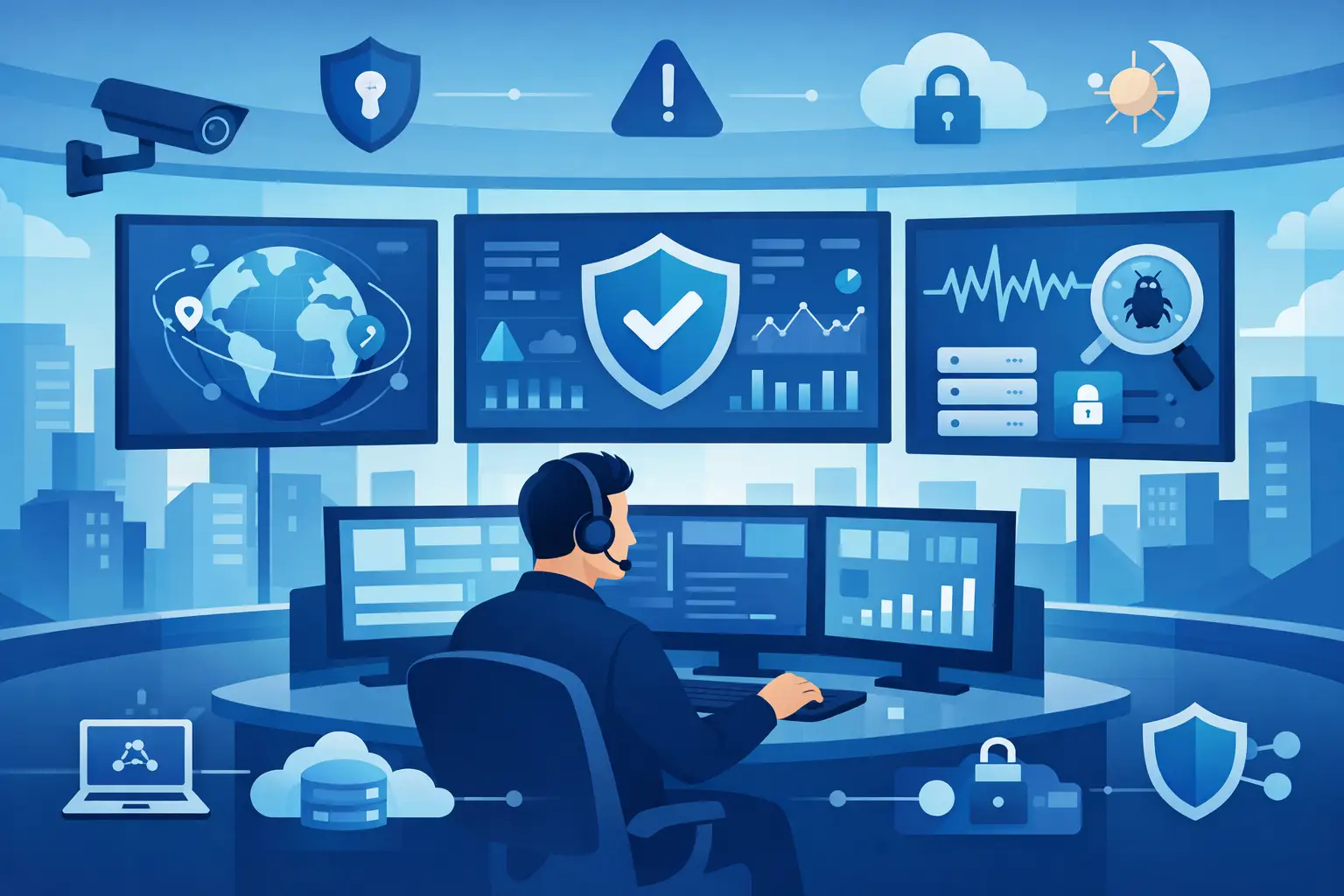
At 2:13 a.m., ransomware does not wait for your security manager to wake up, your help desk to open, or your SIEM alert queue to get reviewed. That is the real value of a 24 7 soc monitoring service. It puts trained analysts, tuned detection logic, and active response behind your environment at the exact moment an attacker starts moving.
For MSPs, MSSPs, and VARs, that matters for another reason. Customers expect enterprise-grade protection without enterprise-scale overhead. For SMBs and lean IT teams, the same reality applies from a different angle - they need continuous security operations, but they do not have the staffing model, tooling depth, or after-hours coverage to build it internally.
What a 24 7 SOC monitoring service actually is
A true 24 7 SOC monitoring service is more than alert forwarding. It is an operating model that combines telemetry collection, detection engineering, triage, investigation, escalation, and response across every hour of the day. The service watches endpoints, cloud activity, identity events, network signals, and security controls for indicators of compromise and behavior that suggests an active threat.
That distinction matters because many providers claim around-the-clock coverage when they really mean infrastructure uptime or basic notification handling. Real SOC monitoring means analysts are available when detections fire, they understand the attack path, and they can determine whether an event is noise, suspicious activity, or a confirmed incident requiring action.
The strongest services add AI-driven analytics to improve speed and consistency, but automation by itself is not the product. Detection has to lead to investigation, and investigation has to lead to action. If a service can identify malicious PowerShell activity but cannot validate user context, trace lateral movement, or contain an endpoint, coverage is incomplete.
Why organizations buy 24 7 SOC monitoring service coverage
The most common reason is simple: the threat window is continuous, while internal teams are not. Even larger organizations struggle to maintain full analyst coverage across nights, weekends, and holidays. Smaller organizations usually never attempt it because the cost of hiring, training, scheduling, and retaining SOC talent is too high.
There is also a tooling problem. A SOC is not a single platform. It is a layered stack of endpoint telemetry, SIEM or data analysis, threat intelligence, case management, workflow orchestration, and response controls. Buying tools is expensive. Running them well is harder. Tuning detections, reducing false positives, and investigating events in a way that stands up under pressure requires mature processes, not just licenses.
For channel partners, outsourced SOC operations solve both delivery and business model challenges. An MSP may have strong infrastructure and support capabilities but no practical path to staffing a live SOC. A white-labeled or partner-aligned service closes that gap and creates a recurring cybersecurity offering without forcing the provider to build an internal operation from scratch.
What good monitoring looks like in practice
When a 24 7 SOC monitoring service is operating correctly, customers should see disciplined execution rather than noise. Analysts review detections based on severity, context, and likely attack progression. Benign alerts are closed with rationale. Suspicious activity is investigated against endpoint, user, and network evidence. Confirmed threats are escalated quickly with recommended or executed response actions.
That process often begins with endpoint behavior. An analyst sees a suspicious script, registry modification, or privilege escalation event. The next step is not guesswork. They correlate that signal with host activity, user behavior, external indicators, and any known adversary techniques. If the event maps to active compromise, response begins immediately - isolate a host, disable a user, terminate a process, or contain further spread based on the service scope.
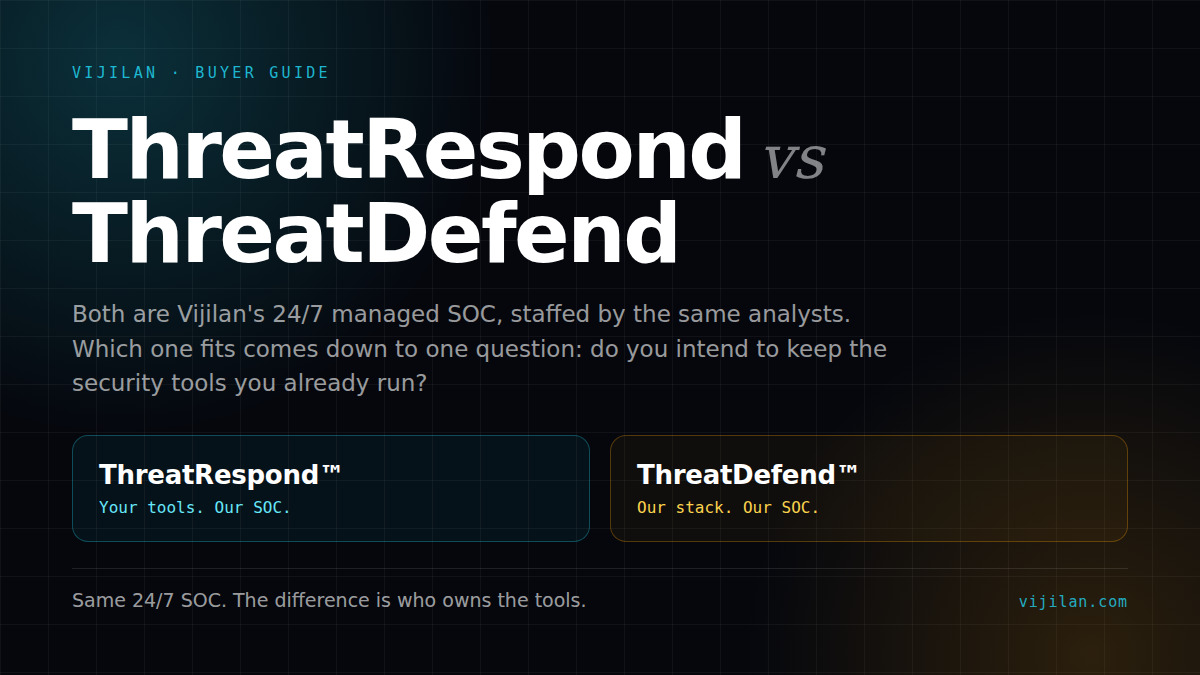
This is where service design matters. Some organizations already own a strong set of security tools and need a SOC team to operate them effectively. Others want a bundled model that includes the security stack and the analysts behind it. Both approaches can work. The right fit depends on current investments, visibility gaps, procurement preferences, and how much operational responsibility the customer wants to retain.
Where a 24 7 SOC monitoring service creates the most value
The clearest value appears in environments where attacks move faster than internal teams can investigate. That includes ransomware precursors, account compromise, business email compromise, privilege abuse, and hands-on-keyboard activity that starts after business hours.
It also matters in environments with fragmented visibility. Many organizations have security tools deployed across endpoints, Microsoft 365, cloud workloads, firewalls, and identity providers, but no unified workflow for triage and response. A SOC service brings those signals into one operating rhythm. Instead of asking multiple administrators to interpret disconnected alerts, the service centralizes analysis and drives decisions based on evidence.
For partners, the value is strategic as well as operational. A mature SOC capability increases account trust, supports contract expansion, and helps retain customers that would otherwise look for a more security-focused provider. It also changes the sales conversation. You are not selling a product bundle. You are delivering a live security function that is always active and prepared to act.
What to evaluate before you choose a provider
Not every provider offering 24 7 SOC monitoring service coverage operates at the same level. Buyers should look past marketing claims and examine how the service actually runs.
First, assess the response model. Does the provider only notify, or can it take action? If action is available, what controls are in scope, and what authorization model applies? Speed matters, but so does clarity around who does what during a live incident.
Second, examine detection quality. Ask how detections are tuned, how false positives are reduced, and how the service accounts for your environment. Generic alerting creates fatigue. Effective monitoring reflects customer context, asset criticality, and known attack paths.
Third, look at staffing depth and handoff discipline. A 24/7 promise only works if analysts can maintain continuity across shifts. Cases should not stall because one team clocked out and another team starts from zero. Mature SOC operations rely on documented workflows, escalation paths, and evidence capture that preserve investigative momentum.
Fourth, understand how the service aligns with your operating model. MSPs and MSSPs may need white-labeled delivery, channel protection, and a partner-friendly commercial structure. End-user organizations may care more about direct analyst access, compliance reporting, and how the SOC integrates with internal IT and leadership teams. The right answer depends on who owns the customer relationship and who is expected to act when a threat is confirmed.
The build-versus-buy reality
Organizations sometimes assume they can assemble an internal SOC over time. In theory, that sounds reasonable. In practice, 24/7 coverage is expensive and difficult to sustain. Staffing alone means shift rotation, management oversight, training, turnover risk, and the constant pressure to retain experienced analysts in a competitive market.
Then there is the maturity gap. A functioning SOC requires playbooks, threat workflows, tuning discipline, reporting, quality control, and response coordination. Those capabilities are built through repetition. They do not appear because a company purchased a SIEM and hired a few security engineers.
That does not mean every organization should fully outsource every security function. Some want a co-managed model where internal teams keep architectural control while an external SOC handles continuous monitoring and first-line response. Others need a complete managed service that includes both the technology and the people. The right model is the one that closes real coverage gaps without creating operational confusion.
For that reason, many buyers choose a managed cybersecurity company that can support both paths. A service model built to operate customer-owned tools can preserve existing investments. A fully managed option can accelerate deployment for organizations that want a single operating partner. Vijilan is structured around both needs, which is especially relevant for channel partners that need flexibility across different customer profiles.
The outcome that matters
A 24 7 SOC monitoring service is not just there to watch dashboards. Its job is to reduce attacker dwell time, improve detection accuracy, and make sure suspicious activity turns into decisive action before it becomes business disruption.
That outcome depends on a simple standard: when something malicious happens at an inconvenient hour, someone capable must already be watching, already have context, and already be prepared to act. If your current model cannot guarantee that, the gap is not theoretical. It is operational.
The right SOC partner gives you more than coverage. It gives you a security function that stays active when your internal team cannot, scales when your customer base grows, and responds with the discipline modern threats demand. That is the difference between having security tools and having security operations.
Threat notes, once a week
What our SOC actually saw this week: new attack patterns, the detections we shipped against them, and what it means if you run an MSP. Written by the analysts, not by marketing.
See what 24/7 looks like when the SOC actually acts.
Book a 20-minute platform walkthrough: no slide deck, just the console.
Book a walkthrough →