How White Label SOC Services Scale Security
White label SOC services help MSPs and MSSPs deliver 24/7 threat detection, response, and branded growth without building a SOC from scratch.

The fastest way to lose a security opportunity is to promise monitoring and then rely on a ticket queue that sleeps at night. Buyers know the difference. They expect 24/7 coverage, faster investigation, and real response when alerts turn into incidents. That is why white label SOC services have become a strategic operating model for MSPs, MSSPs, and VARs that want to deliver serious cybersecurity without standing up a full security operations center.
For channel partners, the appeal is not just technical coverage. It is control over brand, customer experience, and recurring revenue. A strong white-label model lets you bring enterprise-grade detection and response to market under your own banner while a live SOC handles the work behind the scenes. Done right, it strengthens retention, expands wallet share, and raises the security maturity of your customer base without forcing you into the cost structure of an in-house SOC.
What white label SOC services actually provide
At a basic level, white label SOC services give a partner access to a 24/7 security operations capability that can be presented as the partner's own service. That includes continuous monitoring, alert triage, investigation, escalation, and incident response support. Depending on the provider, it may also include managed detection and response, endpoint telemetry analysis, SIEM monitoring, cloud security oversight, and reporting aligned to the partner's brand.
The distinction that matters is operational depth. Some providers forward alerts and little else. Others act. That difference shows up when a suspicious PowerShell chain, lateral movement attempt, or identity-based attack starts unfolding after hours. If the service is only a monitoring layer, your team still carries the response burden. If the service is built around live SOC operations, analysts investigate, validate, and help contain the threat before it spreads.
For many MSPs, that is the dividing line between selling a security add-on and delivering a credible managed cybersecurity service.
Why MSPs and MSSPs choose white label SOC services
Building a SOC internally is expensive long before it becomes effective. You need tooling, process design, use-case tuning, around-the-clock staffing, escalation paths, reporting discipline, and experienced analysts who can separate noise from real attacker behavior. Even well-funded providers struggle with overnight coverage, analyst retention, and keeping detection logic current against evolving threats.
White label SOC services compress that timeline. Instead of spending years building people, process, and platform, a partner can launch with a mature operating model. That matters commercially because customers are not waiting for your SOC roadmap. They are buying protection now.
There is also a margin story here, but it is not as simple as outsourcing to lower cost. The real value is leverage. Your team can stay focused on account management, vCIO strategy, infrastructure operations, and customer growth while the SOC handles monitoring and investigation. Security becomes easier to scale because it is not constrained by your ability to recruit Tier 1 through Tier 3 analysts in a tight labor market.
The operating model matters more than the label
Not every white-label offer is partner-friendly in practice. Some look good in a sales deck but break down when customers need fast action or when your service desk needs clear coordination with the SOC.
A serious model should answer a few operational questions. Who owns the tooling? Can the service support customer-owned security controls, or only the provider's stack? How are incidents escalated? What does after-hours response look like? How much tuning and environment context is applied? Are reports and portals truly brandable, or is the white label limited to a logo on a PDF?
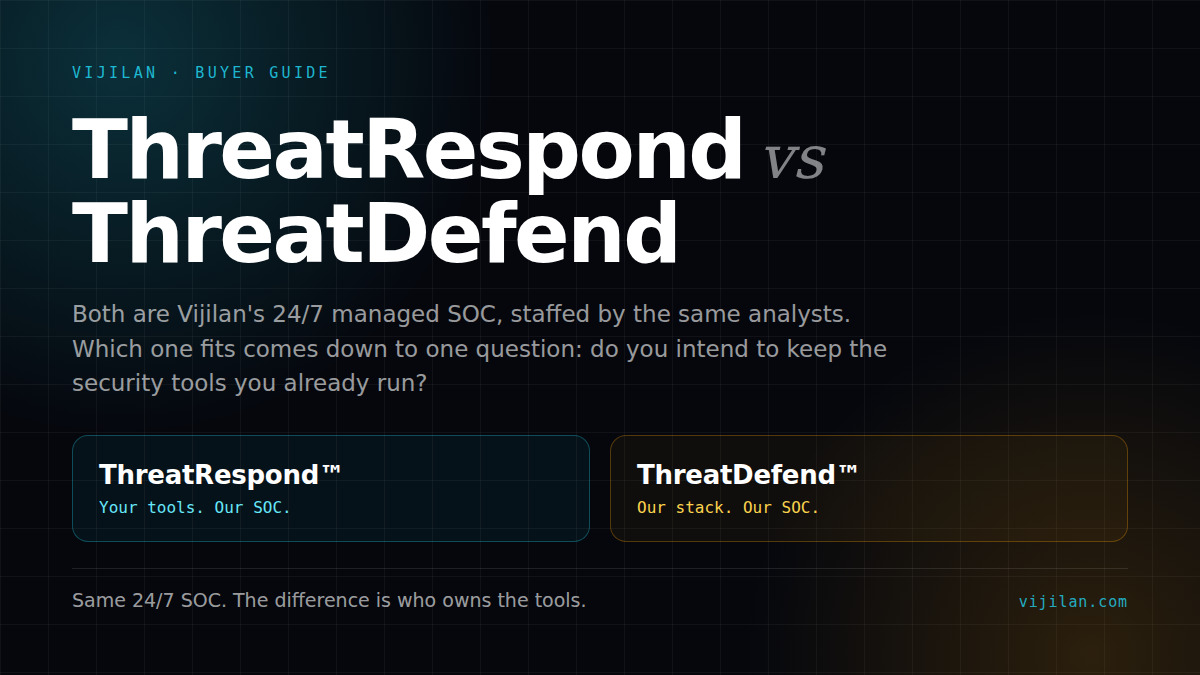
This is where service architecture becomes critical. Some partners want a SOC team that supports the controls already deployed in customer environments. Others want a bundled model that includes both the technology stack and the analysts operating it. Neither approach is universally better. It depends on your installed base, your standardization strategy, and how much security ownership you want to carry.
If your customers already have established endpoint, cloud, or log management tools, a bring-your-own-stack SOC model may preserve flexibility and reduce migration friction. If you want tighter consistency and faster onboarding, a bundled stack plus SOC model may produce cleaner operations and stronger outcomes.
What buyers expect from white label SOC services
End customers rarely ask for a "white-label SOC" by name. They ask for confidence. They want to know that suspicious activity will be seen quickly, assessed accurately, and handled by people who know what to do next.
That means your backend partner must support more than visibility. Buyers expect analysts who can investigate alerts in context, determine scope, and recommend or initiate response actions. They expect clear communication during active incidents, not generic notices that shift the burden back to internal IT. They also expect consistency. A service that performs well during a demo but floods the customer with low-value alerts during week two will damage your brand, not the SOC provider's.
This is why AI-driven detection alone is not enough. AI can improve speed, correlation, and prioritization, but customers still need human judgment at the moment a decision has to be made. The strongest white label SOC services combine machine-speed signal processing with analysts who can validate attacker behavior and act with discipline.
Where white label SOC services create the most value
The model is especially effective for MSPs moving upmarket, MSSPs expanding capacity, and VARs turning project-based security work into recurring managed services. It also makes sense for providers serving regulated or security-sensitive clients that need continuous coverage but cannot justify an internal SOC.
For SMB and mid-market customers, the value is obvious. They get access to enterprise-style monitoring and response without hiring their own analysts. For larger organizations, the appeal is different. White-label delivery can augment internal teams, extend after-hours coverage, or add specialized SOC depth around existing tools.
That said, white label SOC services are not a shortcut around accountability. Your customer still sees your brand on the service. If investigation quality is weak, if response workflows are slow, or if communication is inconsistent, the reputational impact lands on you. Choosing the right partner is as much about trust and operating discipline as it is about technology.
How to evaluate a white label SOC partner
Start with evidence of live operations. Ask how the SOC handles triage, enrichment, investigation, and containment support. Look at the escalation model and expected response times. Review sample reporting, but do not stop there. Reporting is the output of the service, not the service itself.
Next, examine tool flexibility. A mature provider should be clear about whether they support customer-owned technologies, a prescribed stack, or both. This affects onboarding speed, engineering effort, and long-term standardization.
Then look at channel alignment. A true channel-focused provider understands that your brand comes first. That should show up in communication standards, tenant separation, white-labeled deliverables, and support models that reinforce your customer ownership rather than compete with it.
Finally, test for operational fit. Some partners need a quiet backend SOC that works entirely behind the curtain. Others want co-managed visibility and strategic collaboration on detections, response playbooks, and service growth. The right fit depends on your maturity and business model.
A company like Vijilan is built around that channel reality, offering white-labeled 24/7 SOC coverage through models that support either customer-owned tools or a bundled security stack. That kind of flexibility matters because partner environments are rarely uniform.
The trade-offs to consider
White label SOC services solve many problems, but not all of them. You still need internal ownership for customer communication, service packaging, and security strategy. If your onboarding process is weak or your customers lack basic security hygiene, even a strong SOC will spend too much time reacting to preventable issues.
There is also a standardization trade-off. Supporting many customer toolsets can improve sales flexibility, but it may complicate operations and reporting. A tighter stack can improve detection consistency, yet it may require migration work some customers resist.
The best decision is usually the one that matches your customer mix and growth plan. If you need fast market entry and broad compatibility, flexible SOC support may be the better move. If you want operational efficiency at scale, a bundled approach often wins.
White label SOC services are a growth decision
Security buyers are getting more selective. They want proof that someone is watching, investigating, and ready to act at any hour. For channel partners, meeting that expectation no longer requires building a full SOC from the ground up. It requires choosing an operating model that lets you deliver real security outcomes under your own brand.
That is the real case for white label SOC services. They do more than extend coverage. They let you turn cybersecurity into a credible, scalable service line backed by live operations, disciplined response, and a partner model built for recurring growth.
If you are evaluating your next step in managed security, the question is not whether customers need 24/7 defense. They do. The better question is whether your current model can deliver it with the speed, consistency, and authority your brand promises.
Threat notes, once a week
What our SOC actually saw this week: new attack patterns, the detections we shipped against them, and what it means if you run an MSP. Written by the analysts, not by marketing.
See what 24/7 looks like when the SOC actually acts.
Book a 20-minute platform walkthrough: no slide deck, just the console.
Book a walkthrough →